Introduction
Many people discover Ashtanga Yoga and feel inspired by its strength, discipline, and flowing movements. However, a common question soon follows:
“How do I start practicing Ashtanga Yoga at home?”
The good news is that you do not need to be flexible, strong, or experienced to begin. Every advanced practitioner was once a beginner. With patience and consistency, anyone can start building an Ashtanga Yoga practice from home.
In this guide, we will walk through the basic steps to help you begin your journey safely and confidently.
What Is Ashtanga Yoga?
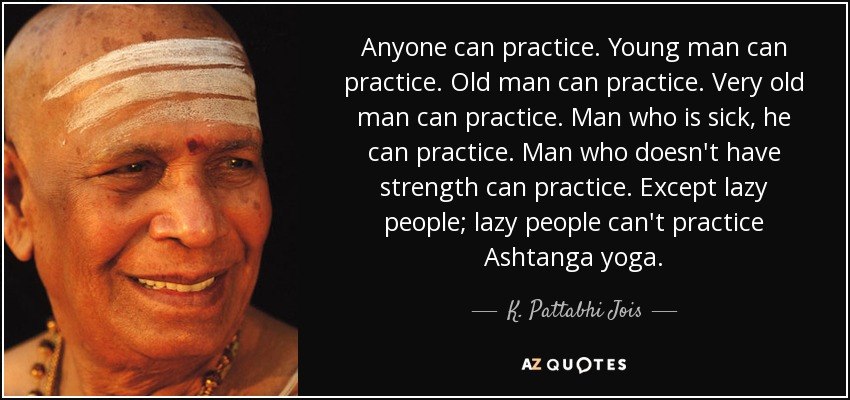
Ashtanga Yoga is a traditional system of yoga developed and taught by Sri K. Pattabhi Jois Ji in Mysore, India. It combines breath, movement, and focused awareness to create a moving meditation. Rather than learning different sequences every day, students follow a set series of postures that gradually build strength, flexibility, balance, and mental clarity. This step-by-step approach makes Ashtanga Yoga a powerful practice for both physical fitness and personal growth
Unlike many modern yoga classes where sequences change daily, Ashtanga Yoga follows a structured system. This allows practitioners to build strength, flexibility, endurance, and mindfulness over time.
Step 1: Create a Dedicated Practice Space
You do not need a large yoga studio to practice.
Find a quiet space in your home where you can move comfortably. A simple yoga mat and enough room to stretch your arms and legs are usually enough.
Try to keep this area clean and free from distractions. Over time, your mind will naturally associate this space with practice and focus.
What You Need
- A yoga mat
- Comfortable clothing
- Water for after practice
- A quiet environment
Remember, simplicity is often best.
Step 2: Practice at the Same Time Each Day
Consistency is more important than duration.
Traditional Ashtanga Yoga is often practiced early in the morning, but the best time is the time you can maintain regularly.
If you can only practice in the evening, that is perfectly fine.
For beginners, aim for:
- 20–30 minutes per session
- 3–5 days per week
Building a habit is more important than practicing for long hours.
Step 3: Learn the Basics of Breathing
Breath is the foundation of Ashtanga Yoga.
During practice, focus on slow and steady breathing through the nose. Avoid holding your breath or breathing too quickly.
As you move through postures, allow your breath to guide the movement.
A simple rule:
One breath = one movement
When breath and movement work together, the practice becomes more focused and calming.
Step 4: Begin with the Foundations of the Primary Series
One of the unique aspects of Ashtanga Yoga is that it follows a structured sequence. Rather than choosing random poses each day, students gradually learn a set series of postures designed to build strength, flexibility, balance, and concentration.
As a beginner, you do not need to learn the entire Primary Series immediately. Start with the foundational elements:
Surya Namaskar A (Sun Salutation A)
Surya Namaskar B (Sun Salutation B)
Standing postures
Basic seated postures
These movements help develop the strength, mobility, and body awareness needed for a safe and sustainable practice.
Remember, progress in Ashtanga Yoga is not measured by how many postures you can perform. It is measured by the quality of your breath, your consistency, and your ability to stay present during practice.
With regular effort, the practice naturally unfolds one step at a time.
Step 5: Focus on Progress, Not Perfection
One of the most valuable lessons in Ashtanga Yoga is patience.
Some days you may feel strong and energized.
Other days your body may feel stiff or tired.
Both experiences are normal.
Avoid comparing yourself to photos on social media or advanced practitioners. Your only goal is to show up consistently and improve gradually.
Small daily efforts create lasting results.
Step 6: Listen to Your Body
Yoga should challenge you, but it should never cause pain.
If a posture feels uncomfortable or unsafe:
- Slow down
- Modify the pose
- Rest when needed
Respecting your body’s limits helps prevent injuries and creates a sustainable practice.
Remember:
Progress in yoga comes from consistency, not force.
Common Mistakes Beginners Make
Practicing Too Much Too Soon
Enthusiasm is great, but overtraining can lead to exhaustion or injury.
Ignoring the Breath
Many beginners focus only on the poses and forget the breath.
Comparing Yourself to Others
Every body is different. Your journey is unique.
Chasing Advanced Postures
Master the basics first. Strong foundations lead to long-term success.
Should You Learn Ashtanga Yoga From a Teacher?
Starting an Ashtanga Yoga practice at home is an excellent first step, but learning from an experienced teacher can help you build a stronger foundation and avoid common mistakes.
A qualified Ashtanga Yoga teacher can guide you with:
- Proper alignment and posture technique
- Breath awareness and synchronization
- Safe progression through the Primary Series
- Traditional Ashtanga Yoga methodology
- Personalized adjustments based on your level and experience
Many practitioners find that combining a regular home practice with occasional classes or workshops creates the best balance between independence and proper instruction.
Final Thoughts
Beginning an Ashtanga Yoga practice at home does not need to be complicated. All you need is a quiet space, a yoga mat, and the willingness to practice consistently.
Start with the basics, focus on your breath, and allow your practice to develop gradually over time. Remember that yoga is not about achieving the most advanced posture. It is about cultivating awareness, discipline, and a deeper connection with yourself.
The true power of Ashtanga Yoga comes through regular practice. Even a few minutes each day can lead to noticeable improvements in strength, flexibility, focus, and overall well-being.
If you would like to deepen your understanding of traditional Ashtanga Yoga, consider learning from experienced teachers through workshops, retreats, or a structured teacher training program.
At Om Ashtanga Yogashala in Rishikesh, we offer a traditional 200 Hour Yoga Teacher Training Course designed for both aspiring yoga teachers and dedicated practitioners who wish to deepen their personal practice. Through daily Ashtanga Yoga classes, philosophy, pranayama, anatomy, and meditation, students gain a comprehensive understanding of authentic yoga traditions in the Yoga Capital of the World.
Whether your goal is to teach yoga professionally or simply strengthen your own practice, guided learning can provide valuable support on your yoga journey.
About the Author
Aryan Chaudhary is the founder and lead trainer of Om Ashtanga Yogashala in Rishikesh, India. He specializes in traditional Ashtanga Yoga, Yoga Teacher Training, Pranayama, and Yoga Philosophy. Through his teaching, he helps students from around the world build a strong and authentic yoga practice.
Explore More:
• 200 Hour Yoga Teacher Training
• What Is Ashtanga Yoga?
• Contact Us
4 Comments
I really loved reading about Ashtanga Yoga! Thanks for curating this
Thank you Mr Rajan
Loved the effort! Thanks
Thanks Aniruddh